How HTTP Works
HTTP is the language browsers, APIs, and servers use to ask for and deliver web resources
At its core, HTTP is straightforward: a client sends a request, a server sends back a response. The protocol defines the shape of that exchange so different systems can interoperate without custom wiring.
Modern applications build a huge amount of behavior on top of this simple pattern: pages, JSON APIs, file downloads, auth flows, caching, content negotiation, and more.
Last updated: May 11, 2026
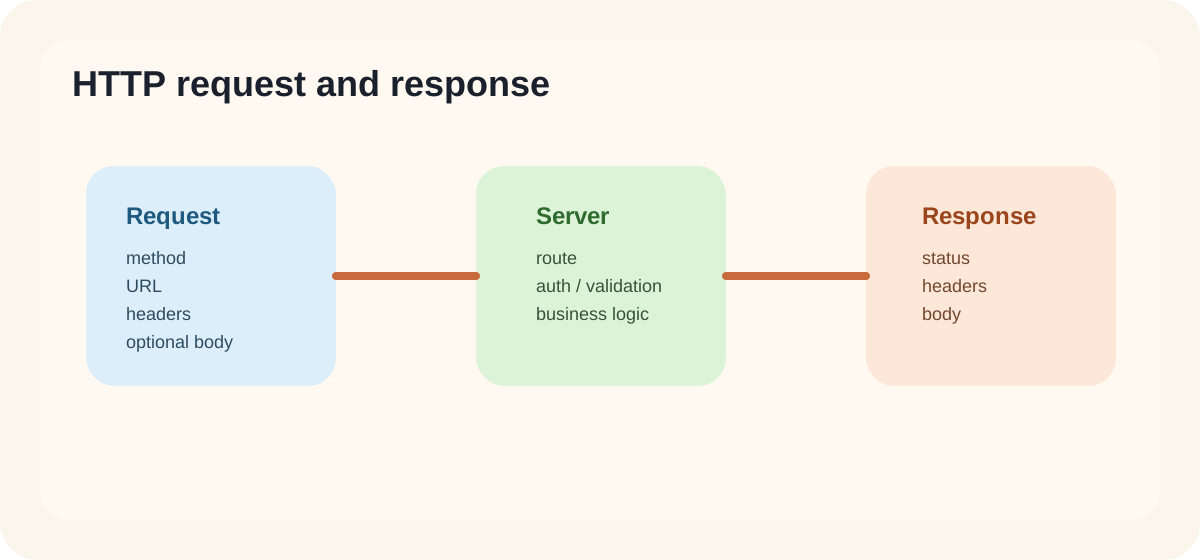
What is in a request
A request typically includes a method such as GET or POST, a target URL, headers, and sometimes a body. Headers carry metadata like content type, cookies, authorization tokens, accepted formats, and cache directives.
What is in a response
The response includes a status code, headers, and an optional body. The body might be HTML, JSON, an image, plain text, or something else entirely.
Status codes communicate high-level outcome: success, redirects, client errors, or server errors.
A practical request example
When a browser requests a page, it sends a method such as GET, a path, and headers describing what it can accept. The server might respond with HTML and a 200 OK status, or with JSON if the request targets an API endpoint.
That same pattern shows up in mobile apps, backend services, CLI tools, and webhooks. The payload changes, but the request-response structure stays familiar enough that many debugging skills transfer directly between products.
Why HTTP is called stateless
Each request is independent from the protocol’s perspective. The server does not automatically remember previous requests. Applications simulate continuity using cookies, tokens, sessions, and database-backed state.
Where caching and proxies fit
HTTP is not only a direct browser-to-server protocol. Requests and responses can pass through proxies, load balancers, reverse proxies, and CDNs. Cache headers such as Cache-Control, ETag, and Last-Modified influence whether those layers can reuse an earlier response.
This matters in production because a surprising amount of web behavior comes from intermediate layers rather than your application code alone. If one user sees stale content while another sees a fresh version, the difference may be in caching or routing rather than in the origin server.
Common methods
- GET retrieves a resource.
- POST submits data or triggers server-side work.
- PUT usually replaces a resource representation.
- PATCH partially updates a resource.
- DELETE removes a resource.
Common confusion
- HTTP itself is not encryption; HTTPS is HTTP over TLS.
- A successful TCP connection does not guarantee a successful HTTP response.
- Status codes describe the result of the request, not necessarily the full business outcome inside an application.
What developers usually debug
Most HTTP debugging comes down to a few recurring questions: did the request go to the right URL, did it carry the expected headers, did the body match the declared content type, and did an intermediate cache or proxy change what came back? Those checks often explain failures faster than reading application code first.