How Databases Work
Databases are optimized systems for durable storage, retrieval, and consistency
An application could write files directly, but that becomes painful once you need filtering, concurrent writes, indexes, transactions, permissions, replication, backups, and predictable query performance. A database handles those concerns as a specialized system.
Relational and non-relational databases differ in interface and data model, but they all solve the same broad problem: manage data efficiently under real-world load and failure conditions.
Last updated: May 11, 2026
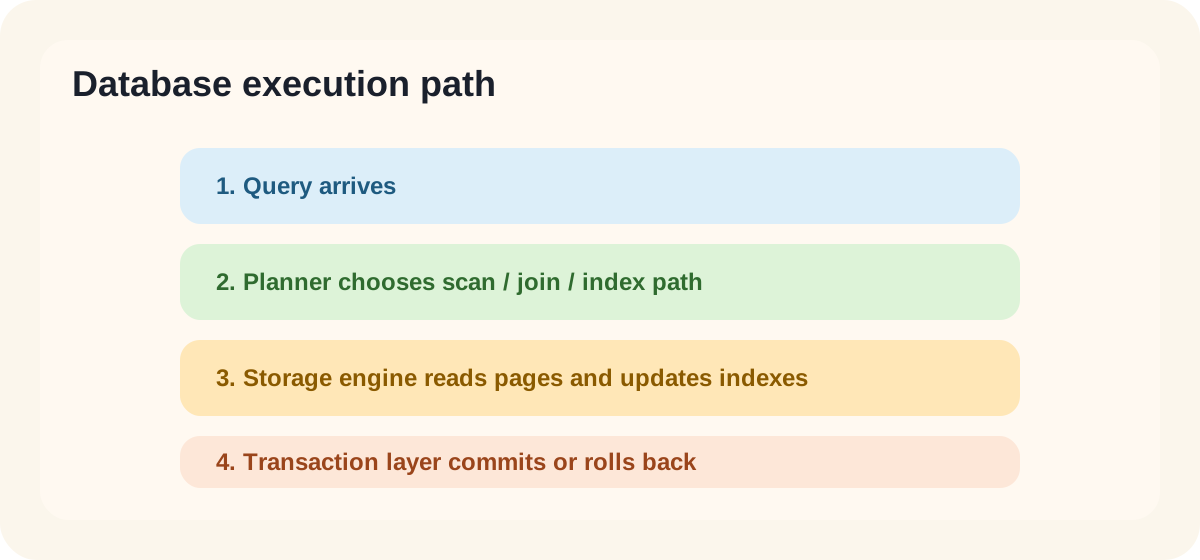
The basic flow
- Data is written into storage structures managed by the database engine.
- Indexes are maintained so future queries can avoid full scans when possible.
- The query planner decides how to execute reads and joins based on available structures.
- Transactions coordinate changes so concurrent clients do not corrupt shared state.
Why indexes matter
An index is a secondary structure that helps the database locate rows or documents faster. It speeds up many reads, but it also adds write overhead because each insert, update, or delete may need to update the index too.
Why reads and writes pull in different directions
A schema or index that makes one query extremely fast can make writes slower or consume more storage. Databases are full of these tradeoffs. Good database design is often about choosing which access patterns matter most and paying the extra cost only where it buys real value.
Why transactions matter
Transactions let a group of related changes behave as one unit. If part of the work fails, the database can roll back the transaction so the system does not end up in a half-written state.
Relational and non-relational systems
Relational databases emphasize tables, joins, schemas, and transaction semantics. Non-relational systems may optimize for document access, key-value lookups, graph traversal, or large distributed workloads. The right choice depends on access patterns, consistency requirements, and operational constraints more than on trend language.
Common confusion
- Fast queries are not only about hardware; schema and indexing choices matter heavily.
- NoSQL does not mean no structure. It usually means a different structure and consistency model.
- Caching can reduce database load, but it does not replace durable storage.
What developers usually investigate
Database incidents often come down to missing indexes, inefficient query shapes, lock contention, connection pool exhaustion, or traffic patterns that changed faster than the schema design. The database is rarely “slow” in the abstract. It is usually slow for a specific workload and access path.