How ChatGPT Works
A chat assistant is more than one model call wrapped in a text box
At the core is a transformer-based language model that predicts likely next tokens from prior context. But the product experience around that model also matters: user and system messages are assembled into a prompt, inference is run over a context window, and the output is streamed back as generated text.
Depending on the system, there may also be safety checks, tool calls, retrieval, memory features, and post-processing around the raw model output.
Last updated: May 11, 2026
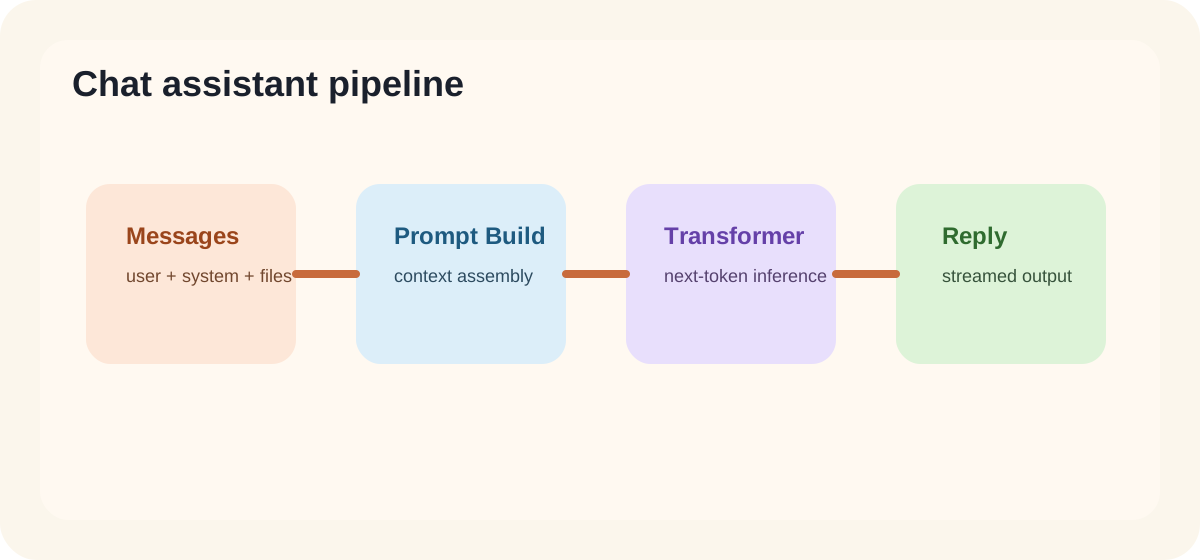
High-level flow
- User messages and system instructions are packaged into model-readable context.
- Text is tokenized into pieces the model can process.
- The transformer runs inference and predicts the next token repeatedly.
- The generated tokens are decoded back into text and streamed to the interface.
- Optional orchestration layers may invoke tools, attach files, retrieve context, or filter unsafe outputs.
Why the chat format matters
The model output depends heavily on the context it sees. A chat product therefore manages role labels, conversation history, formatting conventions, and truncation rules so the model gets the right instructions and relevant prior turns.
Why product behavior is not only “the model”
Two chat products built on similar language models can still feel very different. The difference may come from system instructions, safety policies, tool orchestration, retrieval systems, message history handling, or how the interface asks the model to structure an answer. Users often blame the core model for behavior that actually comes from these surrounding layers.
Why responses can vary
Language models generate text probabilistically. Small changes in prompt wording, context ordering, temperature settings, or tool results can lead to noticeably different outputs.
Tools, retrieval, and memory are different ideas
A tool call means the assistant invokes an external capability such as code execution, search, or file processing. Retrieval means relevant external text is fetched and included in the context. Memory features usually mean the system persists some information across interactions. These are often grouped together in conversation, but they solve different product problems.
Common confusion
- The system does not “look up” every answer unless retrieval or a tool is explicitly used.
- A chat assistant may sound confident even when it is wrong, because fluency and factual correctness are different properties.
- The visible chat interface is only one layer on top of the model and surrounding orchestration.
Why developers care about this distinction
If you are building with chat models, many practical issues are not about abstract AI theory. They are about prompt assembly, latency, context budget, grounding, guardrails, and how the product reacts when the model is uncertain. Understanding the full pipeline makes those tradeoffs easier to reason about.