How CDNs Work
CDNs reduce latency by serving content from edge locations instead of one distant origin
A content delivery network distributes copies of cacheable resources across many geographic points of presence. When a user requests a file or response, the CDN tries to serve it from a nearby edge instead of forcing every request back to the origin server.
This improves speed, smooths traffic spikes, and often adds security and request filtering along the way.
Last updated: May 11, 2026
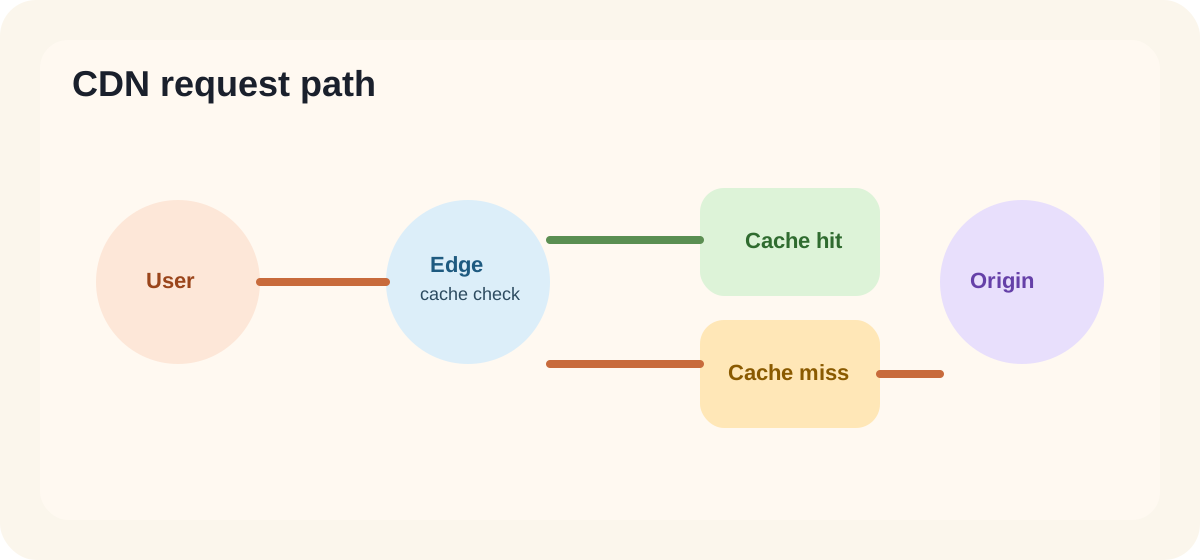
The basic flow
- A user requests a URL that is fronted by a CDN.
- Routing sends the user to an appropriate edge location.
- If the object is cached there and still fresh, the edge serves it immediately.
- If not, the edge fetches it from the origin, returns it to the user, and may cache it for future requests.
Why cache keys matter
The CDN needs to know when two requests should reuse the same cached object and when they should not. That decision is based on the cache key, which may include the path, query parameters, headers, device variations, or other metadata.
Bad cache keys can lead to low cache hit rates or, worse, content being served to the wrong audience.
TTL, freshness, and invalidation
Every cached object needs rules about how long it can be reused. Those rules may come from origin headers or CDN configuration. Longer cache lifetimes improve performance and offload the origin, but they also increase the risk of stale content if invalidation or purging is handled poorly.
What CDNs are good at
- Static assets like images, stylesheets, scripts, and downloadable files.
- Caching public API responses when the data changes infrequently enough.
- Absorbing traffic surges and reducing direct load on origins.
Why dynamic content is harder
Personalized pages, authenticated responses, and country-specific variations all make caching more complicated. In those cases the CDN may still help with TLS termination, security filtering, compression, or routing, but full edge caching may need careful segmentation or partial bypass rules.
Common confusion
- A CDN is not a full replacement for your application servers or database.
- Cache invalidation policies matter as much as enabling caching in the first place.
- Dynamic personalized content often needs careful rules or bypass behavior.
What developers usually debug
Typical CDN debugging starts with a few questions: was this a cache hit or miss, did the cache key vary the way you expected, was the object considered fresh, and did the origin send headers that matched your intent? Many “mysterious” delivery bugs turn out to be predictable once those pieces are inspected.